Smart Homes for Seniors – Technology for Independent Living
AUTHOR: Carlos ParasUPDATED: January 5, 2026
Life expectancy around the world has increased dramatically over the last hundred years and the trend is only expected to continue. The World Health Organization predicts that individuals over the age of 65 will outnumber children under the age of 14 by the year 2050.
The increase in life expectancy can be partially attributed to a more stable global economy, improved healthcare worldwide, and rapidly growing infrastructure in third world countries.
While this shift in demographics will present various challenges for aging parents and their children, there are certainly positives associated with this development as well. Longer life expectancy means that aging individuals can look forward to spending more quality time with their friends and family and having more time to accomplish personal and professional goals.
This trend also has the potential to stress our healthcare systems more than they currently are. As a society, we must figure out better ways to handle the growing senior population.
After all, conventional wisdom and experience has shown that the older we get, the more care and assistance we typically need. This in turn drives the need for more nursing homes and assisted living facilities.
However, recent studies suggest that such assumptions may quickly become outdated.
A 2016 report by the Joint Center for Housing Studies at Harvard predicts that the number of U.S. households headed by an individual aged 65 years or older will reach 49.6 million by the year 2035. That equates to one in three households and is up from 29.9 million in 2015.
All of these factors combine to create a growing phenomenon where elderly individuals are effectively able to live own their own for a longer period of time. A paradigm shift such as this requires a modern approach to maintaining the highest quality of life and ensuring the best caregiving services for these senior citizens.
Smart home technology is quickly proving itself as an affordable, user-friendly solution that has the potential to help the elderly grow old (on their own) in the comfort of their own home.
In this article, I’ll walk you through what the assistance of smart home devices might accomplish for the growing senior population.
We’ll examine the concept of “aging in place” along with its benefits and challenges for seniors and their families. And finally, I’ll list a few smart home devices that are most beneficial to independent seniors and offer tips on how to implement smart home technology into their lives and homes.
Smart Home Deals @ AmazonAging in Place

Generally, the phrase “aging in place” is used to describe an individual who has made the conscious decision to live independently in their own home, for as long as they can. This approach may seem counter-intuitive to some, but it actually provides numerous benefits not available within the traditional elderly care system.
Direct access to the comforts of home, while having a sense of freedom and self-worth are important to those going through the process of aging. While supplementary services such as in-home nursing care can be added on an as-needed basis, the primary goal of aging in place is for seniors to maintain their quality of life on their own terms, for as long as physically possible.
As many seniors who choose to pursue this approach have little difficulty performing everyday tasks independently, aging in place could very quickly become the norm.
In comparison to living in a nursing home or assisted care facility, the opportunity to age in place ensures a higher level of personal happiness and fulfillment for aging individuals. Still, the aging process has been known to present numerous challenges, regardless of which approach is adopted by senior citizens and their loved ones.
Here is just a partial list of the challenges for those who choose to age in place:
- Increasingly poor eyesight can make it difficult to navigate throughout the home.
- Reduced muscle mass and deteriorating strength can make previously easy physical activity, extremely exhausting.
- An increased risk of accidents and serious injury, due in large part to fragile bones and poor balance.
- Diminishing levels of mobility, agility, and flexibility can directly affect how aging individuals are able to go about their day.
These challenges may seem impossible to overcome at first, but the rapid advance of modern medicine is sure to lessen their effects for those who will grow old in the future.
For seniors interested in the pursuit of aging in place in the near term, smart home technology can prove to be an excellent ally for ensuring long-term independence. More specifically, implementing smart home devices has the potential to automate many everyday tasks, while providing senior citizens a host of useful benefits.
Smart Home Benefits for Seniors
The miracle of modern technology has made life easier for many people around the world. From the ability to instantaneously contact anyone, anywhere, at any time, to the convenience of having the world’s knowledge base at your fingertips, technology has fundamentally changed the way that we go about our daily lives.
Likewise, smart home technology promises tremendous benefits for seniors planning to live at home independently.
Smart home devices can offer peace of mind for family members and caregivers providing assistance to elderly individuals. Due to the interconnected nature of smart homes, far more information can be made available to caregivers than provided by a simple medical alert bracelet.
More importantly, smart home automation systems can provide seniors access to a number of beneficial features including:
Phone Calls Made with Voice Commands

A voice assistant-enabled smart display, like the Amazon Echo Show 8 (link to Amazon) can allow elderly individuals to contact their loved ones or caregivers quickly and easily without having to locate a phone.
By using a voice assistant, a video phone call can be made using simple voice commands. This is extremely helpful, especially if an elderly loved one were to fall or need immediate medical attention.
Related Article: Best Smart Display for Seniors - Video Calling and Entertainment
Easy Access to Entertainment
Smart displays like the No products found. (link to Amazon) and the Meta Portal (link to Amazon) can provide instant access to entertainment. Voice commands are all that is needed to play music and videos or listen to audiobooks from anywhere in the home. For seniors with limited mobility, this feature makes independent living far more comfortable and enjoyable.
Automatic Reminders to Take Medication
Ensuring that seniors who choose to live independently get their proper medication is another cause for concern. The implementation of a voice assistant schedule can remind elderly individuals when they need to take their medications, and even what their medications look like. Smart pillboxes can help guarantee that safe and regular medication doses are received by independent seniors.
Cost Savings
As many of today’s seniors are living on fixed incomes, the ability to reduce monthly expenses should be considered an essential aspect of aging in place. Smart thermostats, like the ecobee New Smart Thermostat (link to Amazon), can control the home environment by heating or cooling the home only when it is necessary.
These devices can provide automatic climate control, which means having to worry about elderly loved ones failing to set the thermostat will be a thing of the past. Utilizing these features can easily translate into lower monthly utility bills and less strain on the pocketbooks of seniors.
Prevent Accidental Wandering
Seniors suffering from dementia are prone to wander throughout their homes. This is typically fine, but if they happen to wander outside of the home, they can quickly become lost or confused.
Smart home technology allows for the creation of geo-fencing or GPS-enabled “safe zones.” Should a person wander outside of these safe zones, caregivers and family members are instantaneously notified via a smartphone app, which will help them find their loved ones quickly.
The Tracki GPS Tracker (link to Amazon) is a perfect example of this type of technology.
These are just a few of the many benefits afforded to seniors who live in smart homes. Such benefits are typically associated with a few key smart home devices.
Let’s look at some of these devices and how they can be of help to seniors living independently.
Best Smart Home Devices for Seniors
Smart home devices which are great for everyday consumers might not be the most important options for those aging independently.
Here is a list of some of the best smart home devices for independent seniors:
Smart Door Locks
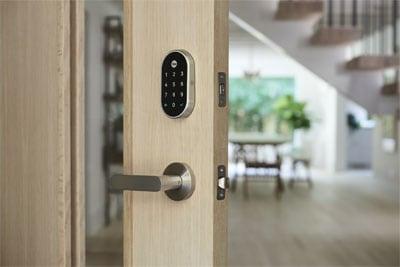
Image Courtesy of: Yale
Smart door locks can be instrumental in the safety and security of a senior living on their own. Most smart locks use a digital code to lock or unlock, instead of a key. This eliminates the need to worry about elderly loved ones misplacing their house keys.
Individual codes can be granted to other caregivers and family members who need access to the house. Smart door locks can also be controlled via smartphone. Seniors can easily double-check whether or not they locked the front door from their phone, in the comfort of their own bed.
Related Article: What Is a Smart Door Lock? Access Control for Security Systems
Medical Alert Devices
Medical emergencies can be a serious concern for independent seniors and their families. The sooner emergency services are able to respond, the better.
Smart home-connected medical alert pendants can be worn around the neck and can be a real lifesaver. With a press of a button, help can be notified and can arrive within a matter of minutes.
Automated Lighting
Automated lighting can offer amazing benefits for any user, but especially for the elderly. Light fixtures or smart light bulbs can be connected to a Wi-Fi network and can be controlled from an app on a smart phone.
When coming home at night, independent seniors can just tap the app on their smartphone to turn on any lighting they need, ensuring safe entry into the house. In addition, certain lights can be set to turn on or off on a schedule which can help cut down on energy costs.
Motion Sensors
These smart devices can help a senior citizen who lives alone through the detection of motion throughout the house. They can be alerted, in real time, on their smartphone if something appears to be wrong. Family members or authorities can be quickly notified, allowing for rapid response in the event of a break-in or robbery.
How Can Seniors Get Started with Smart Home Technology?
The benefits of smart home devices for seniors may not be realized if seniors don’t feel comfortable interacting with the technology. Getting past this common pain point is difficult, to say the least, but there are workable solutions available.
The most challenging step towards creating a smart home for seniors is convincing them to slowly try out this new and unfamiliar technology.
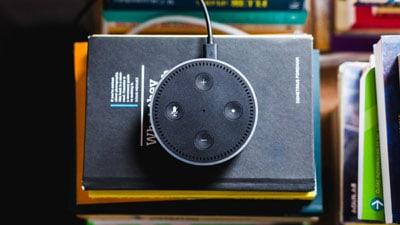
I suggest first introducing a smart speaker, like the Amazon Echo Dot (link to Amazon) or the Google Nest Mini, which can be controlled with simple voice commands.
Using voice commands presents little to no learning curve and provides an approachable introduction to the basics of smart home technology. This, in turn, will help elderly users learn how to interact with additional smart home devices.
After an initial introduction is made, other smart home devices can be added. At this point, seniors will be able to branch out from simply controlling a smart speaker to using the smart speaker to control other devices.
Pair the smart speaker with a few smart light bulbs, like Philips Hue Smart Light Bulbs (link to Amazon), or smart plugs, like the Kasa Smart Plug Mini (link to Amazon).
Once familiarity with the technology has been established, steps to include smart devices that focus on security and safety should be established next. Doorbell cameras like the No products found. (link to Amazon), smart door locks, like the Nest x Yale Lock (link to Amazon), and health monitoring devices, like the Fitbit Versa 4 (link to Amazon), should be prioritized.
Be sure to include smart devices that allow remote control and monitoring through an app on a smartphone. This gives the flexibility to provide additional control and access to family members or others who are providing care to the senior. It also allows the senior to control smart appliances and devices from anywhere in the home. This can be extremely important when lack of mobility is a factor.
Smart Homes Help Seniors Live Longer, Happier, Independent Lives
With modern smart home technology at our fingertips, there is no reason for healthy senior citizens to leave their beloved homes for an institutionalized setting. Instead, we can help them lead long, happy, and independent lives in their favorite settings through the thoughtful application of smart home automation and security systems.
Recommended Products
About the Author